History
I
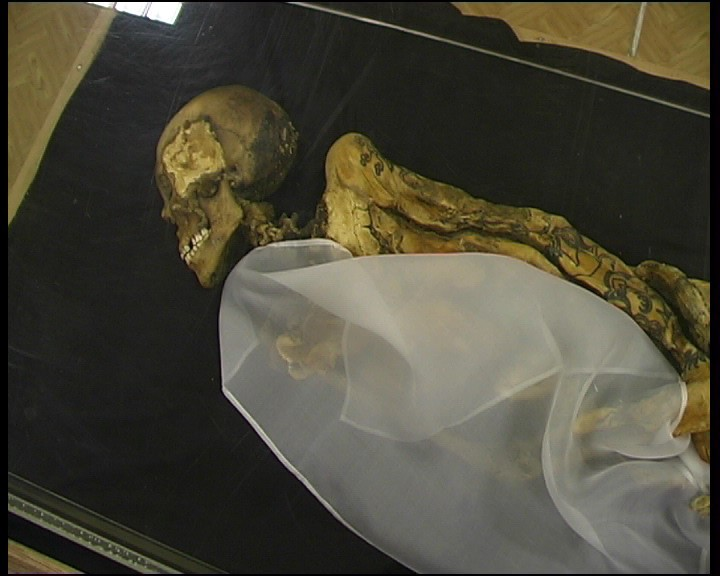
n the heart of the Altai Mountains, where Russia, Mongolia, China, and Kazakhstan converge, lies a frozen realm that holds the secrets of ancient civilizations. In 1993, Russian archaeologists unearthed a remarkable discovery on the Ukok Plateau, a site sacred to the local Altai people. Buried beneath the permafrost, they found the mummified remains of a 25-year-old princess, now known as the Siberian Ice Maiden.
A Glimpse into the Past
The Ice Maiden’s body was remarkably well-preserved, offering a glimpse into the life and customs of the Pazyryk people, a nomadic tribe that roamed the steppes over 2,500 years ago. Her burial mound contained a wealth of artifacts, including finely crafted clothing, jewelry, and six sacrificed horses. But it was her tattoos that truly captivated the world.
Intricate Designs
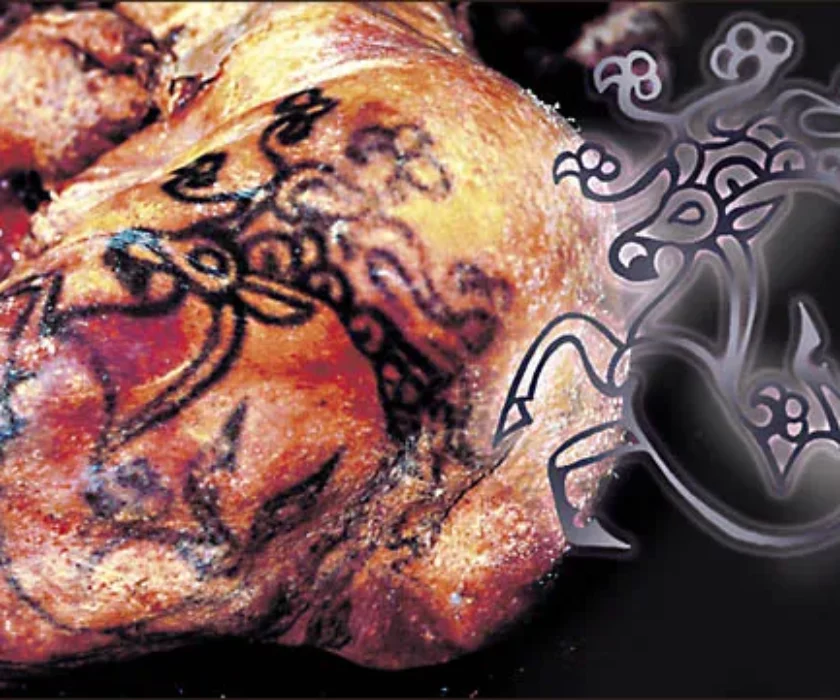
Etched upon the Ice Maiden’s skin were intricate designs depicting a variety of animals, including deer, griffins, snow leopards, and sheep. These elaborate tattoos were not mere decorations; they held deep symbolic meaning within the Pazyryk culture. Tattoos were believed to protect the wearer from evil spirits, enhance their status within society, and serve as a form of spiritual communication. The Ice Maiden’s tattoos, with their intricate details and vibrant colors, were a testament to the artistic skill of the Pazyryk people and provided invaluable insights into their beliefs and worldview.

A Controversial Discovery
The excavation of the Ice Maiden sparked controversy among the Altai people, who considered the removal of their ancestors’ remains from their sacred burial grounds a grave offense. They believed that disturbing the resting place of their ancestors would bring misfortune upon their land. The Altai people’s deep reverence for their ancestors and their connection to the land clashed with the scientific interests of the archaeologists, who sought to uncover the secrets of the past. This cultural divide highlighted the complex issues surrounding the excavation and preservation of ancient remains.
A Legacy of Intrigue
The Siberian Ice Maiden remains a source of fascination and intrigue, a symbol of the enduring power of ancient cultures and the mysteries that lie hidden beneath the frozen earth. Her discovery has sparked a renewed interest in the Pazyryk people and their nomadic way of life, challenging our understanding of the past and inspiring further research. The Ice Maiden’s legacy extends beyond scientific discovery; she has become a cultural icon, her image used in art, literature, and popular culture. Her story reminds us of the profound connections between the past, present, and future, and the importance of preserving and respecting the cultural heritage of indigenous peoples.